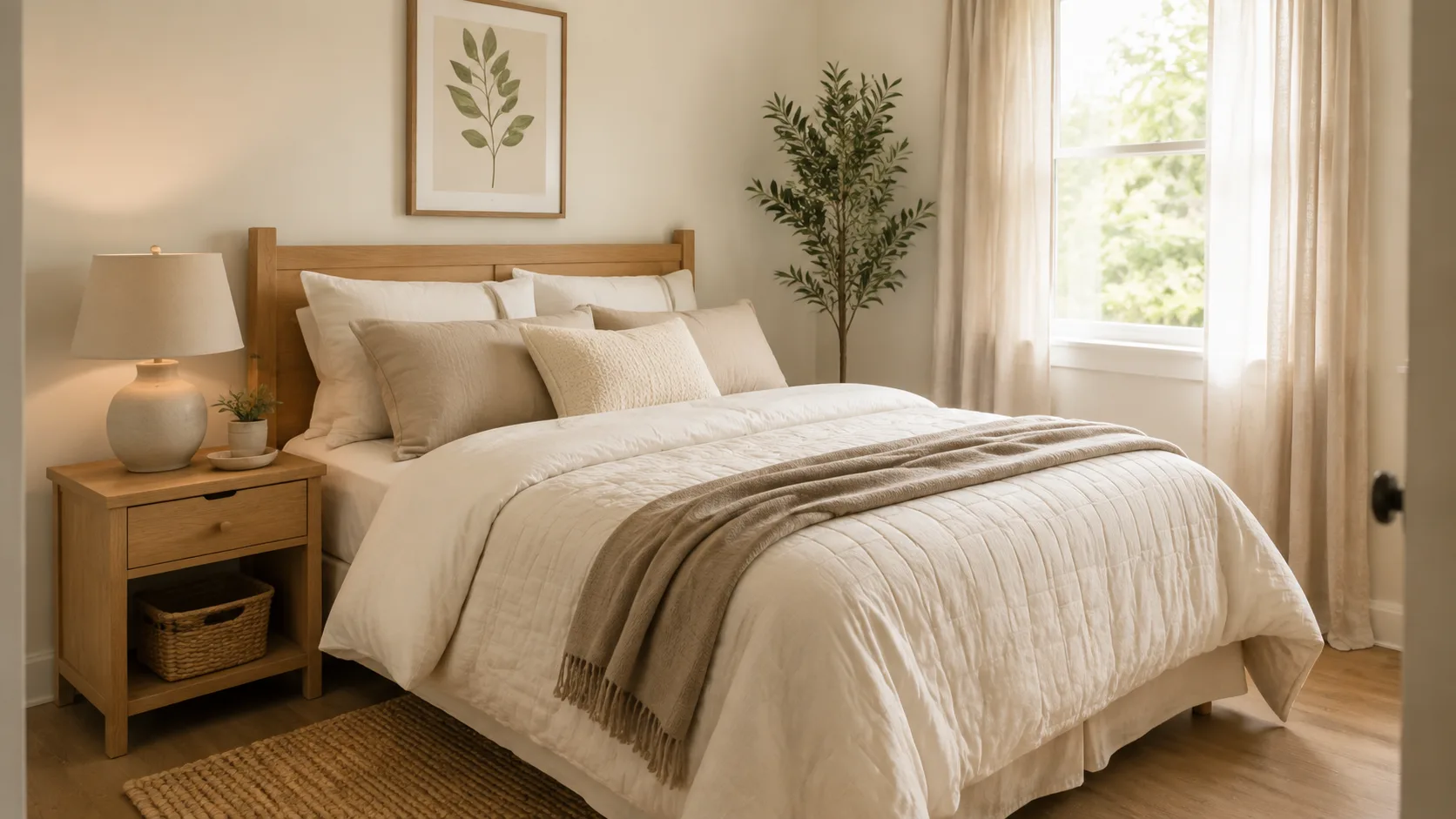
A small bedroom can still feel calm, comfortable, and beautifully styled. The key is not to squeeze more furniture into the room, but to make every choice work harder.
Thoughtful furniture placement, useful storage, soft colors, and a few carefully chosen decorative details can make a compact bedroom feel noticeably more open. Whether you are decorating an apartment bedroom, guest room, or narrow sleeping space, these ideas will help you create a room that feels organized without losing warmth or personality.
1. Begin With a Simple Floor Plan
Before buying anything new, decide which pieces the room truly needs. In most bedrooms, the bed should remain the main feature, while storage and seating play supporting roles.
Leave clear walking paths around the bed whenever possible. Avoid blocking the doorway, closet, or natural light from the window. If the room feels crowded, try moving the bed to a different wall before removing furniture. A small layout change can create more usable space without costing anything.
2. Choose Furniture With a Smaller Visual Footprint
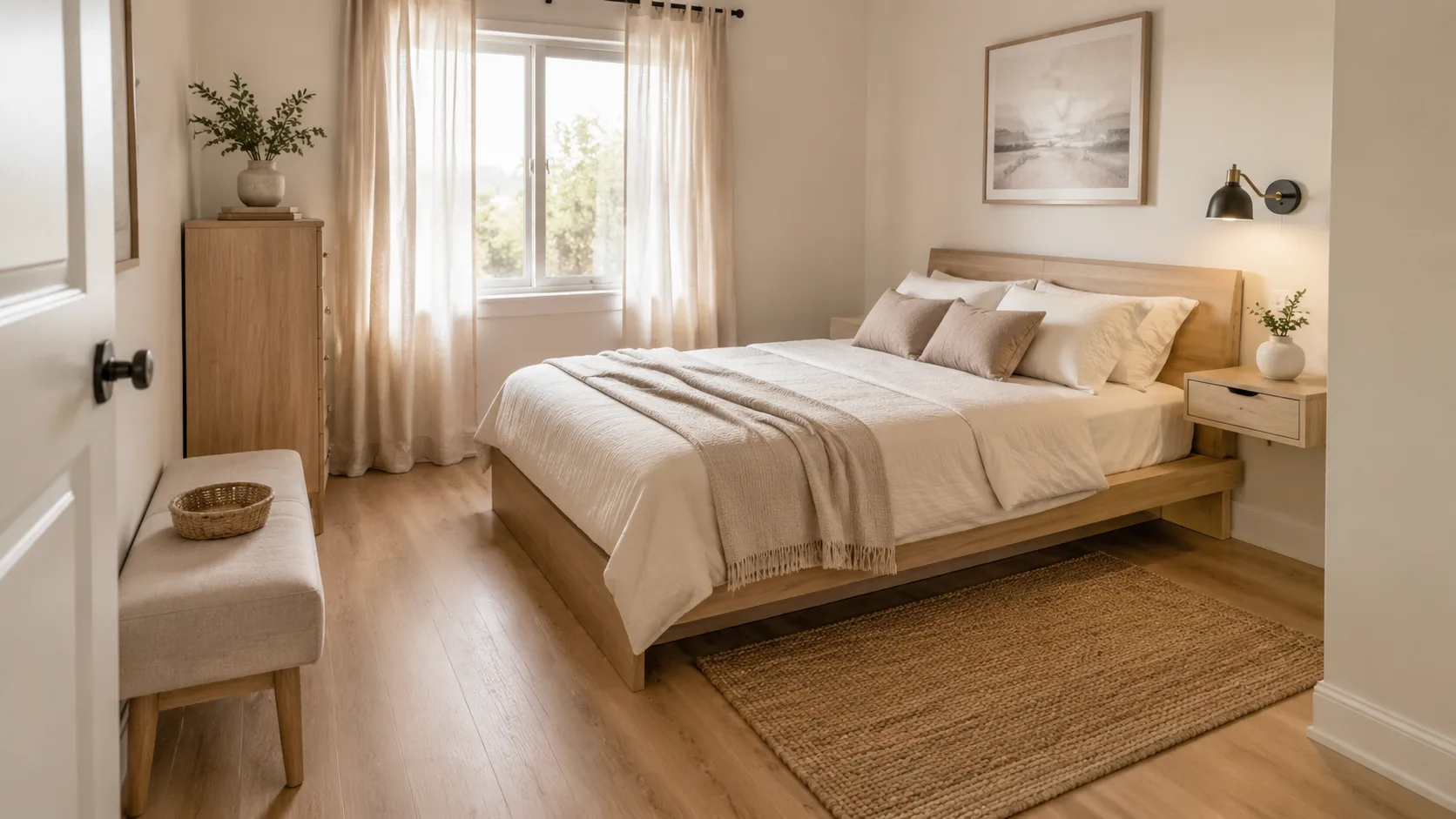
Bulky furniture can overwhelm a compact bedroom, even when it technically fits. Look for pieces with clean lines, slim frames, and raised legs that allow more floor to remain visible.
A simple bed frame, narrow nightstand, or lightweight desk can provide the function you need without making the room feel heavy. Transparent, light-colored, or wall-mounted furniture can also reduce visual clutter.
3. Use the Space Under the Bed
The area beneath the bed is valuable storage that often goes unused. Choose a bed with built-in drawers or add low storage bins for seasonal clothing, extra bedding, shoes, or bags.
Use matching containers so the storage looks intentional, especially when it remains visible. If the bed sits too low, sturdy risers can provide additional clearance while keeping everything easy to reach.
4. Replace Wide Nightstands With Narrow Alternatives
A full-size nightstand is not always necessary. A slim bedside table, wall-mounted shelf, small stool, or compact floating drawer can hold a lamp, phone, and glass of water without taking up much floor space.
When two nightstands will not fit, use one practical table on the more accessible side of the bed. An asymmetrical arrangement can still look balanced when the colors and materials relate to the rest of the room.
5. Take Storage Up the Walls
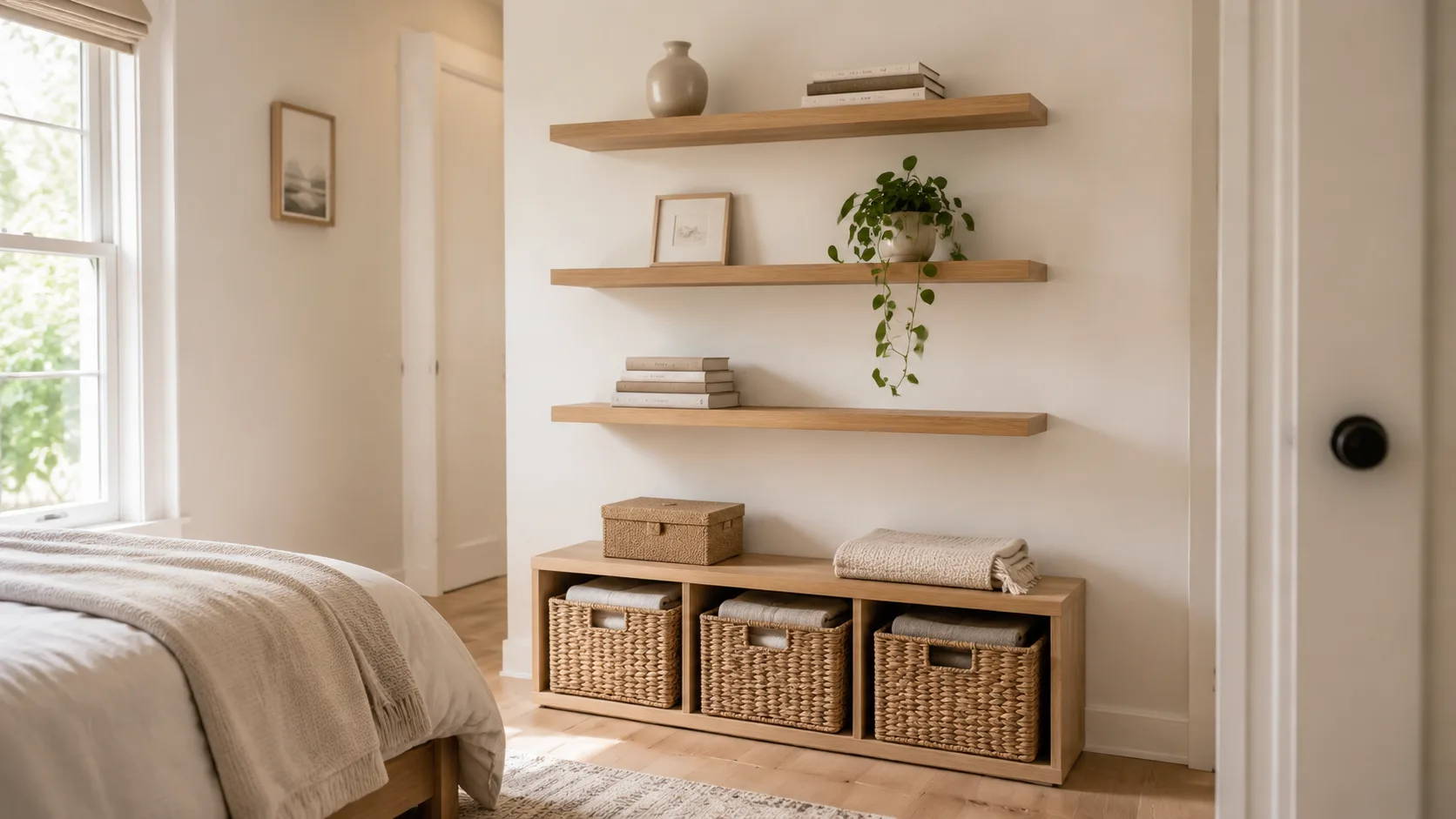
When floor space is limited, use vertical space. Tall bookcases, floating shelves, wall hooks, and cabinets above a desk can add storage without narrowing the room.
Keep frequently used items within comfortable reach and place decorative or seasonal pieces higher up. Avoid filling every inch of the wall. A few organized shelves will feel calmer than many small items scattered around the room.
6. Select a Light, Warm Color Palette
Light colors reflect more natural light and can help a bedroom feel open. Warm white, cream, pale beige, soft greige, and muted blush are gentle choices that still feel cozy.
You can add contrast through a wooden headboard, dark picture frames, or one deeper accent color. Keeping the larger surfaces light while using richer tones in smaller amounts creates depth without closing in the room.
7. Hang Curtains High and Wide
Curtains can change the way a room's proportions are perceived. Mount the rod several inches above the window and extend it beyond the window frame. This draws the eye upward and allows more daylight into the room when the curtains are open.
Choose curtains that reach close to the floor. Lightweight linen-look panels in a color similar to the walls can make the window treatment feel soft without becoming visually heavy.
8. Add a Mirror Where It Can Reflect Light
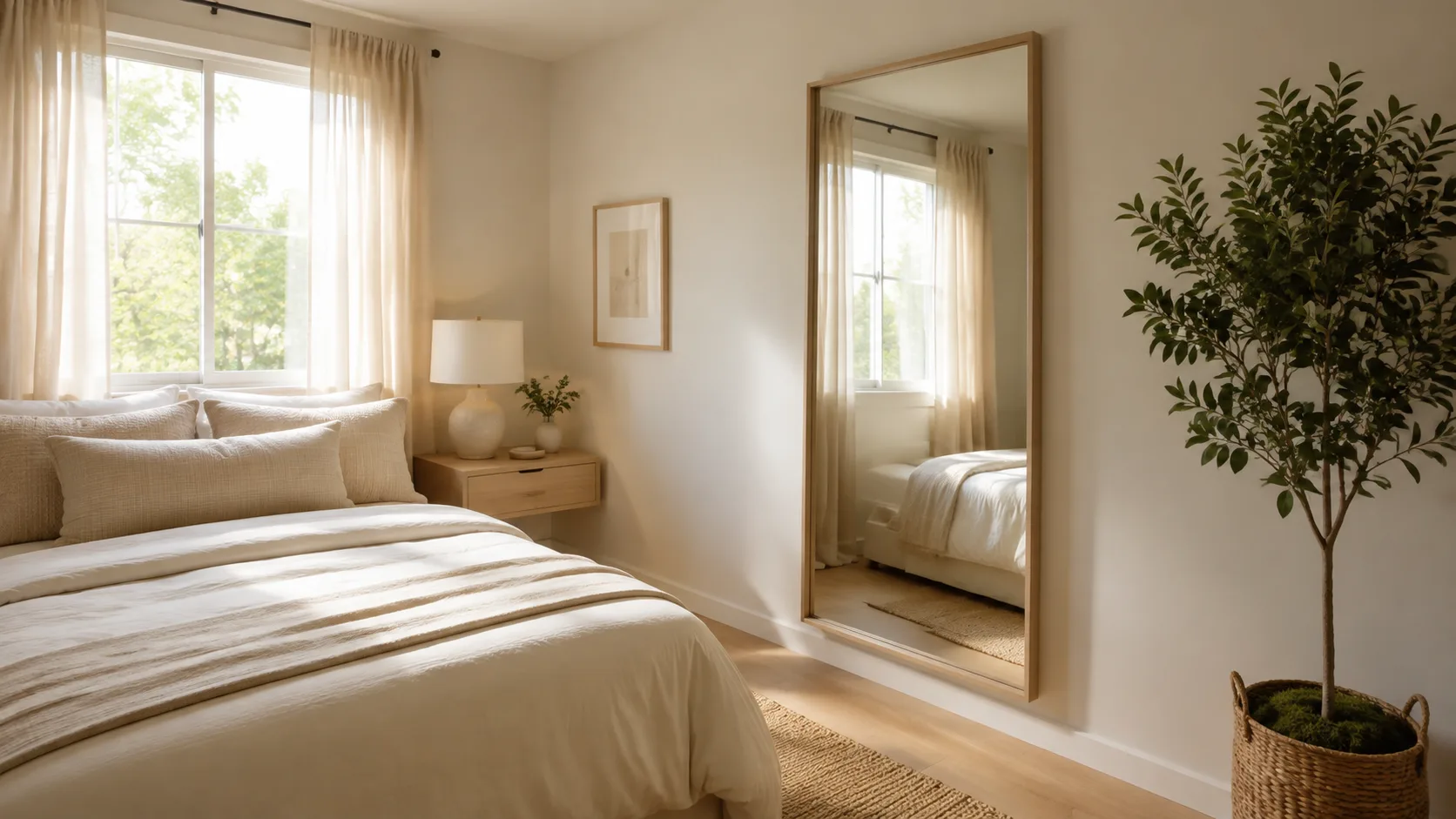
A mirror can make a small bedroom feel brighter and more open by reflecting daylight and views across the room. Place one opposite or beside a window when possible.
A tall leaning mirror can add height, while a wall-mounted mirror above a dresser saves floor space. Choose a frame that matches the room's overall style so the mirror feels like part of the design rather than only a practical accessory.
9. Use Wall-Mounted Lighting
Bedside lamps can take up most of a small nightstand. Wall sconces, plug-in pendant lights, or adjustable reading lamps free the surface while providing useful lighting.
Choose warm white bulbs to keep the room relaxing. If hardwiring is not an option, plug-in fixtures can create the same layered look with less installation.
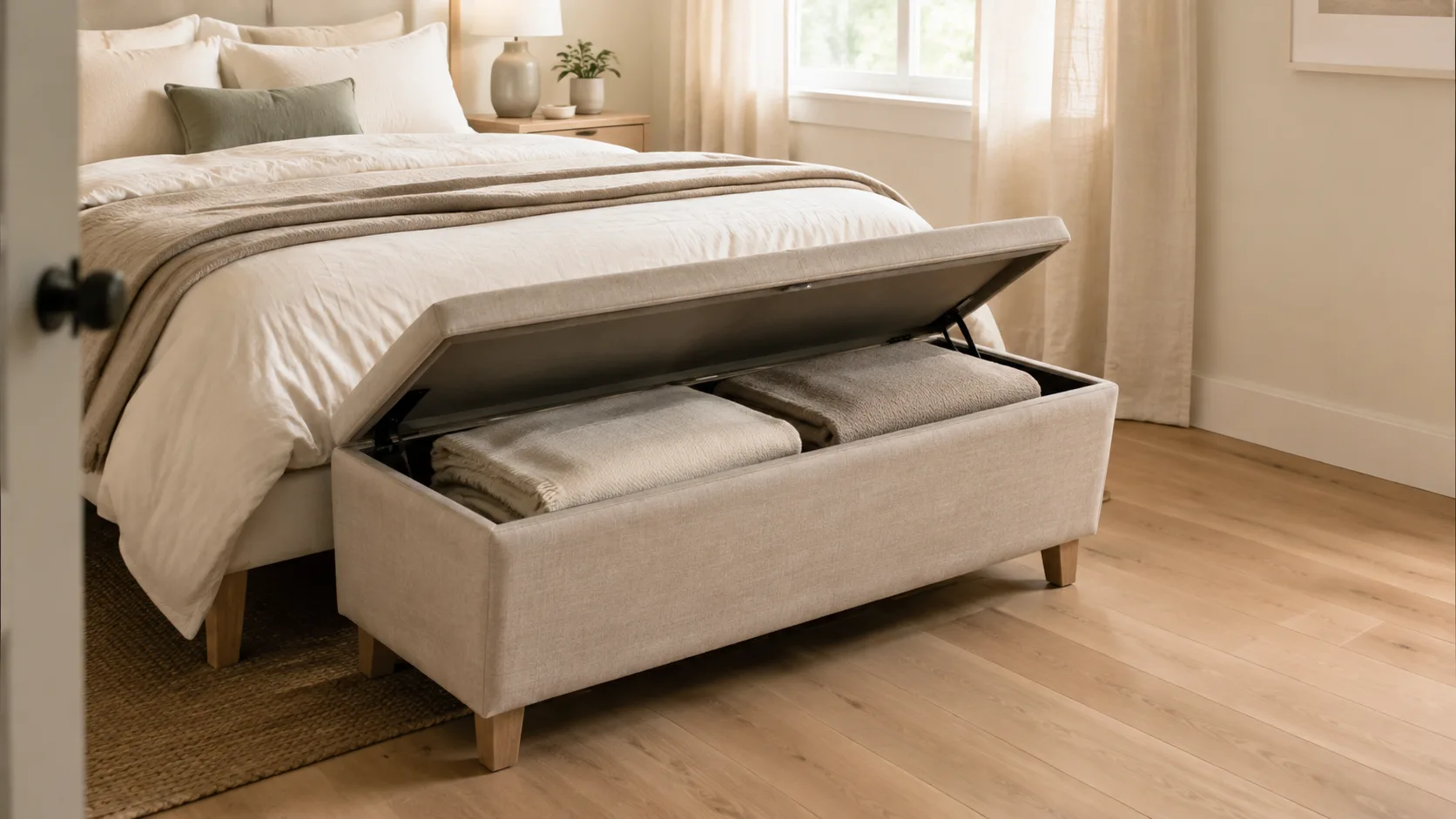
10. Create Hidden Storage Inside Everyday Furniture
Furniture that serves more than one purpose is especially helpful in a small bedroom. Consider an upholstered storage bench, a desk that doubles as a vanity, or a bedside chest with several drawers.
The best multiuse pieces solve a real need without making the room more complicated. Before purchasing one, measure carefully and decide exactly what it will store or support.
11. Keep the Bedding Visually Calm
Too many competing patterns can make a small room feel busy. Start with simple bedding in a light or medium neutral, then add personality with a folded throw and two or three decorative pillows.
Layering different textures creates coziness without requiring many colors. Cotton, linen, knit, and soft quilted fabrics can make a simple bed feel finished and inviting.
12. Edit the Decor Instead of Filling Every Surface
A small bedroom benefits from breathing room. Choose a few meaningful items, such as framed photographs, one piece of artwork, a plant, or a favorite book, and leave some surfaces clear.
Grouping small objects on a tray can make them feel more organized. Regularly remove items that no longer serve a purpose so the room remains restful rather than crowded.
How to Make a Small Bedroom Feel Cozy, Not Cramped
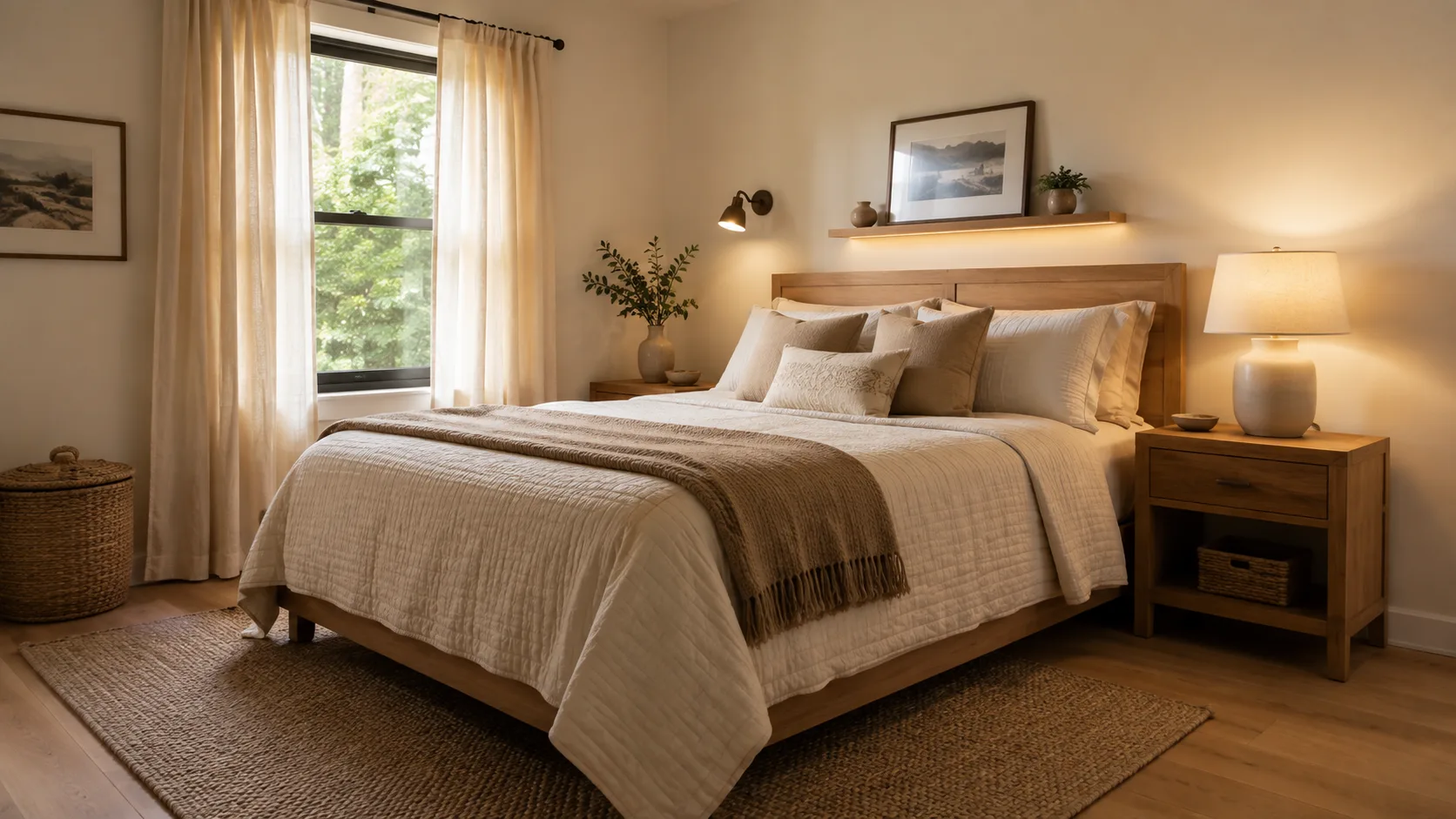
Maximizing space does not mean removing every soft or personal detail. A room can remain practical while still feeling warm. Use layered lighting, comfortable bedding, a small rug, and one or two natural elements such as wood, woven storage, or greenery.
Keep the largest surfaces calm, then add personality through pieces that are easy to change. The goal is not to make the bedroom look empty. It is to give every item enough room to be useful and appreciated.
Final Thoughts
A small bedroom becomes easier to enjoy when every piece has a purpose. Start with the layout, make use of hidden and vertical storage, and choose furniture that fits the actual scale of the room.
You do not need to complete every idea at once. One thoughtful change, such as raising the curtains, adding under-bed storage, or clearing a crowded surface, can make the entire bedroom feel more spacious and peaceful.